

TUI Forest Mauritius
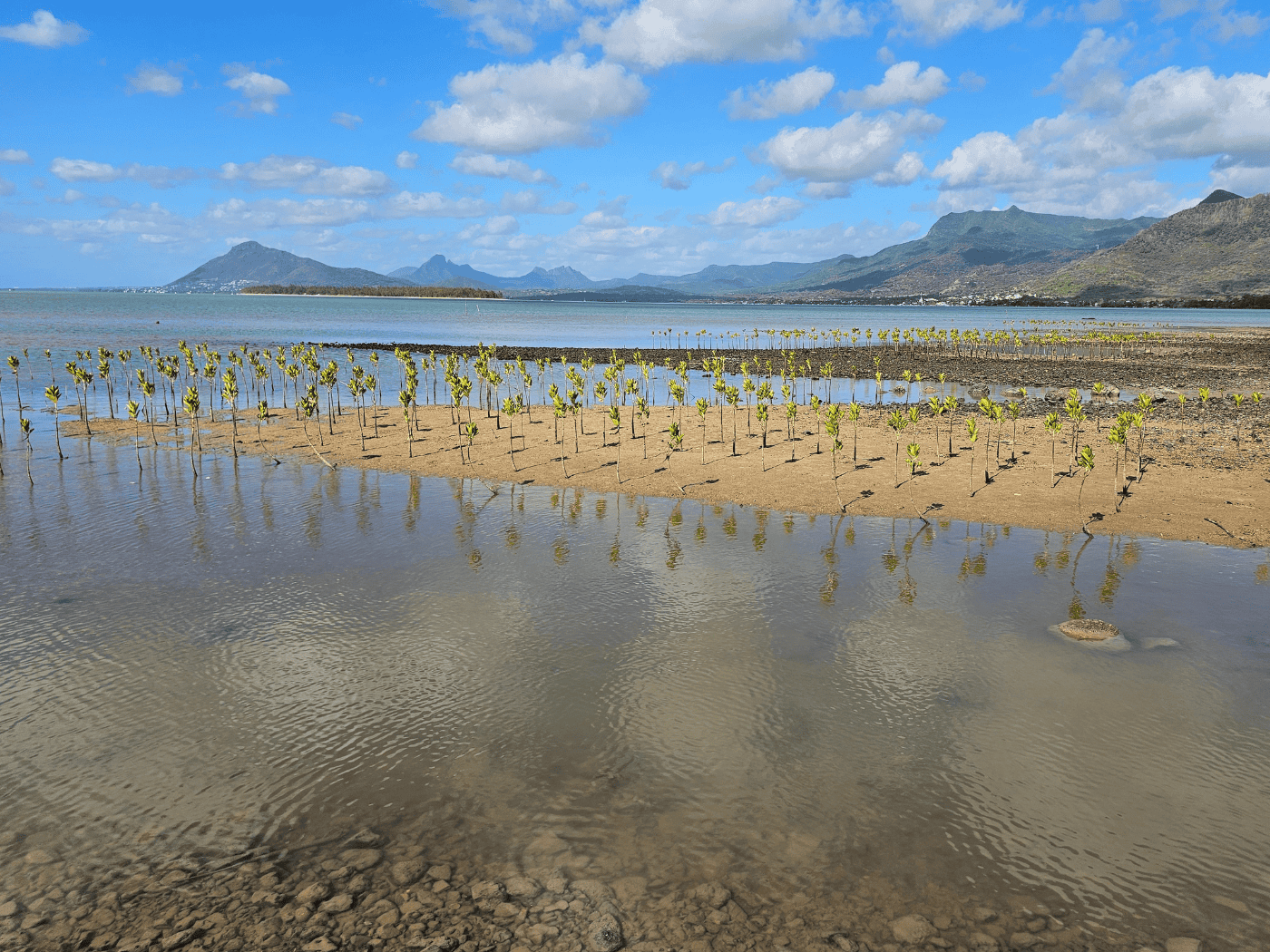
Mangroves cover only 0.07% of the total area in Mauritius, but they play a major role in terms of food security, fisheries support and income generation. They also contribute to human health, cultural values and well-being. However, due to financial and resource limitations, villages near these forests don’t take part in mangrove conservation or restoration activities, as can be seen in Le Morne, one of the poorest settlements in Mauritius.
TUI Forest in Mauritius create awareness and education on the importance of mangroves whilst focusing on the planting of mangrove trees to reforest the island. The project also creates links with the tourism industry to bring economic benefits for the communities managing the mangrove reforestation.
Apart from fishing, there are few opportunities for employment in the coastal communities of Mauritius. Local residents are often dependent on the marine resources they find on the beach for food and protein. Job creation links to tourism are needed to improve their livelihood and eliminate poverty. Le Morne village is in this situation, despite its location near Mauritius’s largest mangrove forest and in the shadow of the Le Morne Brabant mountain, a UNESCO World Heritage site. Exploring its potential in terms of sustainable agroforestry experiences in tourism is at the core of the TUI Forest Mauritius initiative.
TUI Forest Mauritius plants 20,000 mangroves and endemic tress and establishes dedicated, community-managed nurseries at Le Morne, Coteau Raffin and Vallée d’Osterlog, which grow and supply the forests with mature seedlings.
The forest covers 50,000m² of restored land and habitat, which is protected through erosion control structures, the reforestation of vulnerable areas and the establishment of buffer zones along water bodies.
In total, nine endangered animal species are protected, including the fruit bat and the Mauritius kestrel, a beautiful rust-coloured bird of prey. 50 people are involved in the restoration and conservation activities, which include educational programmes and awareness campaigns to inform the public on the value of mangroves.
Over 1,000 visitors participate in nature-based tourism experiences which are tailor-made for the TUI Forest. These include guided nature walks, birdwatching tours, wildlife photography workshops, and interactive educational sessions about the local ecosystem. 26 jobs are being created and maintained through the project, which include workers and contractors for clearing the land, as well as guides for the tourism experiences.


Project Partner
Association pour le Développement Durable’s (ADD’s) mission is to promote sustainable socio-economic development and protection of Earth System through related project implementation, studies and awareness-raising. Promoting community well-being and sustainable island living is at the core of ADD’s vision. The organisation’s objectives are to contribute to national, regional, and international policy formulation on sustainable development issues and to promote strategic studies and research in specific areas that have implications for sustainable development including the environment and the economy of the country.
ADD also aims to identify options and address issues relating to sustainable development, maintain partnerships with other NGOs and community-based governmental organisations having similar interest at national, regional, and international levels, and raise awareness of the public and decision-makers on issues related to sustainable development while disseminating information through the media, publications and meetings.