

TUI Forest Mallorca
The Península de Llevant Natural Park is a unique natural space in the Balearic Islands where mountainous and coastal zones converge. It hosts a diversity of plant and animal species in a relatively small area and has significant ethnological heritage which is vital to the tourism industry, attracting visitors with its pristine landscapes. Unfortunately, it is also an area with the highest recurrence of forest fires in the entire archipelago. Some areas in the region have been burned up to five times in the last 30 years and are a significant example of the indiscriminate nature of fire. This has led to the degradation of the landscape, resulting in issues such as biodiversity loss, soil erosion, hydrological imbalances, and even situations of extreme desertification.
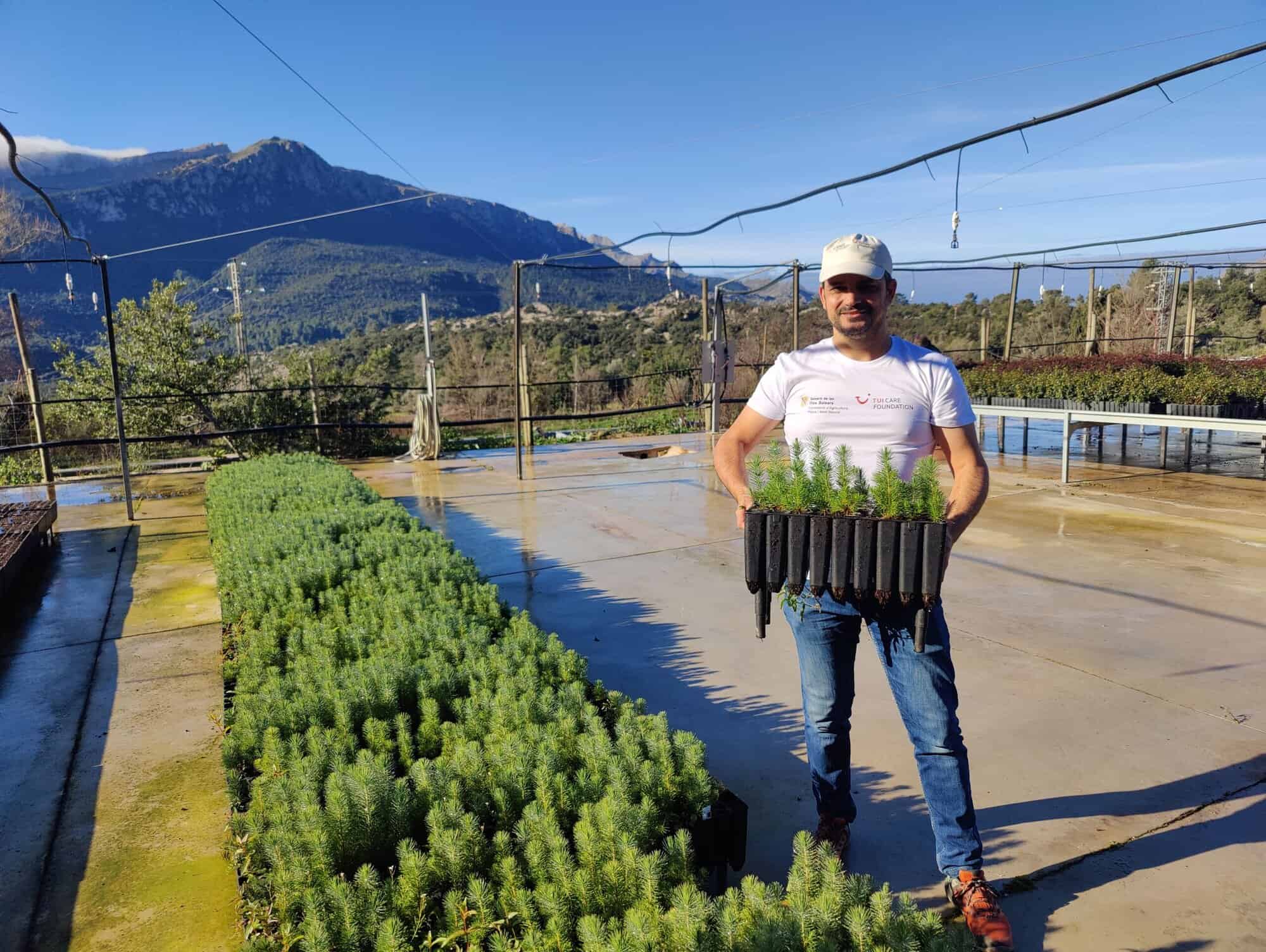
The TUI Care Foundation and the Ministry of Agriculture, Fishing and Environment of the Balearic Islands have initiated a project to continue the commitment of tourism to the biodiversity of the Península de Llevant Natural Park by strengthening the existing TUI Forest and extending the area to Son Real. 42,000 more fire-resistant, native trees and 6,000 plants will be planted by the end of 2028. Reforestation activities are complimented by awareness raising initiatives and experiences for locals and tourists.
The Natural Park of the Llevant Peninsula is one of the most unique and ecologically significant areas in the Balearic Islands. The park’s Mediterranean habitats include holm oak forests, wild olive groves, pine groves, marine cliffs, dune systems, and wetlands associated with streams and the marine environment. These habitats, combined with extensive agricultural ecosystems shaped by traditional farming practices over centuries, offer a representative cross-section of the Mallorcan coast and the Balearic mountains, whilst preserving traditional island activities such as palm weaving.
A century of degradation has left the pristine landscape and 5200-year history of the Península de Llevant Natural Park at risk from wildfires. To mitigate this, TUI Forest Mallorca has launched to offer comprehensive intervention.
More than 200 hectares of forest in north-eastern Mallorca will be restored and protected by planting 42,000 trees and 6,000 plants by the end of 2028. Existing forests are being diversified with new species like olive trees, holm oaks, and kermes oaks to enhance biodiversity and resilience. A new reforestation site is being added, planting pines, olive trees, and holm oaks. Two small agricultural areas feature carob and olive trees.
In Son Real, 6,000 plants, including sea daffodil, sea thistle, and junipers, are being planted to restore the dune ecosystem. Coastal paths are managed and delimited to restore degraded habitats, including new enclosures and sand traps for dune recovery. Maintenance of previous reforestations and installation of new enclosures prevents damage from feral goats and supports reforestation.
Six endangered bird species are being protected through dune recovery, installation of signs and species monitoring. For example, delimiting paths in Son Real supports the nesting of the Kentish Plover. Marking of dune areas prevents disturbances, and access to the Illot dels Porros nesting area of the Audouin’s Gull will be restricted. Informative panels educate visitors and protect sensitive areas, promoting awareness of local wildlife. The Department of Agriculture, Fisheries, and the Environment monitors species like the Kentish Plover, Audouin’s Gull, Balearic Warbler, Red Kite, Black Vulture, and Egyptian Vulture. A plan to control feral goats is also being implemented.
More than 70,000 tourists participate in nature-based tourism experiences by visiting the Natural Park. Existing and new reforestation sites feature routes for walking, cycling, and horseback riding. Coastal paths in Son Real will be conditioned and marked, with informative signs. Active tourism companies offering excursions, horseback riding, and boat trips will be registered to ensure sustainability and respect for the natural park’s values.
1,100 volunteers are involved in restoration and conservation activities, including school children participating in awareness raising initiatives. Environmental education teams and forestry personnel lead these initiatives. Information materials about the park and its conservation efforts are provided to all participating students.
Additionally, 32 jobs are being created to support reforestation, enclosure installation and maintenance work.
The restoration and conservation of the Península de Llevant Natural Park is a comprehensive project aimed at addressing the significant ecological challenges faced by this unique area. By focusing on forest restoration, biodiversity conservation, habitat restoration, sustainable land management, and community engagement, this project seeks to ensure the long-term health and resilience of the park’s ecosystems. Through collaborative efforts and sustained commitment, this invaluable natural space can be protected and enhanced for future generations.
TUI Forest Mallorca builds on a previous reforestation project that was initiated by TUI and the Government of the Balearic Islands in 2009 that planted more than 60,000 trees in the Península de Llevant.
TUI Forest Mallorca is part of the TUI Care Foundation’s global TUI Forests programme, which is planting trees and taking forest-based experiences to the heart of tourism communities. Through the TUI Forests programme, the TUI Care Foundation aims to plant at least five million trees in reforestation projects worldwide.


Project Partner
Among other responsibilities, the Ministry of Agriculture, Fishing and Environment of the Balearic Islands is responsible for the planning and management of natural resources and areas in the region. It is responsible for forestry planning and management with the aim of preventing and extinguishing fires. An important element is also the administration of forest health and the protection of the biological equilibrium of forest ecosystems.